
The Role of DevOps in Data Science: Bridging IT and Analytics
In the fast-paced world of data-driven decision-making, data science and DevOps are converging to create a powerful synergy that accelerates innovation and ensures reliable, scalable solutions. Data science, with its focus on extracting insights from complex datasets, relies heavily on robust IT infrastructure to process, store, and deploy models. Meanwhile, DevOps—a methodology that emphasizes collaboration, automation, and continuous delivery—provides the tools and practices to streamline these processes. For IT professionals, understanding this intersection is critical, as it bridges the gap between traditional IT operations and the analytical demands of data science.
The global DevOps market is projected to reach $20 billion by 2026, according to a 2024 Gartner report, driven by its adoption in data-intensive fields like AI and analytics. For data science teams, DevOps practices such as Continuous Integration/Continuous Deployment (CI/CD) and containerization ensure models are developed, tested, and deployed efficiently, minimizing downtime and maximizing impact. This article explores how DevOps empowers data science projects, with a focus on IT-relevant practices like CI/CD pipelines, containerization, and infrastructure as code (IaC). Through real-world examples and practical guidance, we’ll show IT professionals how to support data science teams and inspire those new to the field to dive into this transformative collaboration.
What is DevOps, and Why Does It Matter for Data Science?
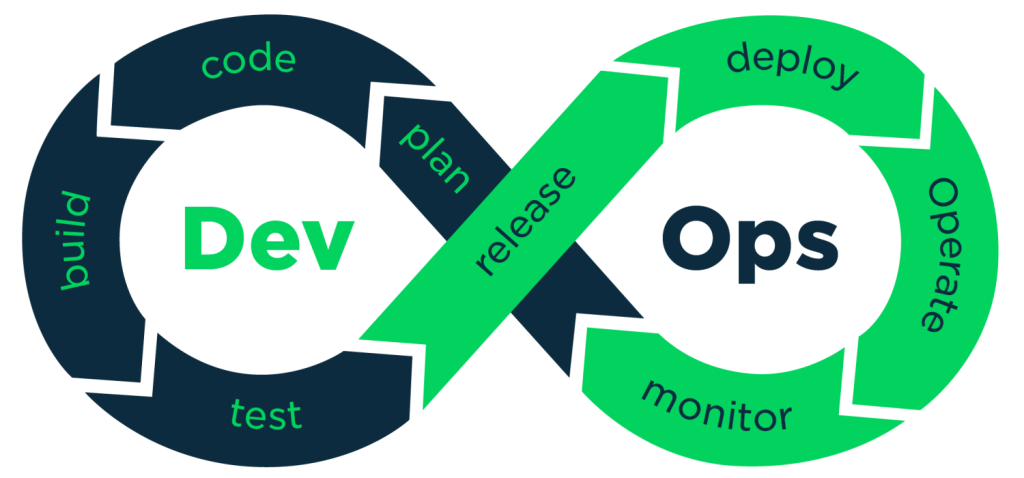
DevOps is a set of practices that combines software development (Dev) and IT operations (Ops) to deliver high-quality software faster and more reliably. It emphasizes collaboration, automation, and continuous improvement, using tools like Docker, Kubernetes, Jenkins, and Terraform. Core DevOps principles include:
- Continuous Integration (CI): Automatically testing and merging code changes to ensure quality.
- Continuous Deployment (CD): Automating the release of code to production for rapid delivery.
- Infrastructure as Code (IaC): Managing infrastructure through code for consistency and scalability.
- Monitoring and Feedback: Tracking system performance to catch issues early.
- Collaboration: Fostering communication between development, operations, and other teams.
For data science, DevOps addresses critical challenges, such as:
- Scalability: Handling large datasets and computationally intensive models.
- Reproducibility: Ensuring models and results can be replicated across environments.
- Deployment: Moving models from notebooks to production systems seamlessly.
- Collaboration: Aligning data scientists, who focus on analytics, with IT teams, who manage infrastructure.
For IT professionals, DevOps provides a framework to support data science workflows while maintaining system reliability and security. Let’s explore how specific DevOps practices enable this synergy.
Key DevOps Practices for Data Science
1. Continuous Integration/Continuous Deployment (CI/CD)
What It Is: CI/CD automates the process of integrating, testing, and deploying code, ensuring that data science models and pipelines are updated reliably and frequently.
How It Supports Data Science:
- CI: Data scientists can integrate changes to models or data pipelines (e.g., new features, updated datasets) into a shared repository. Automated tests validate code quality, model accuracy, and data integrity, catching errors early.
- CD: Models are deployed to production environments (e.g., cloud APIs, web applications) automatically, reducing manual errors and downtime.
Real-World Example: A financial institution uses Jenkins to build a CI/CD pipeline for a fraud detection model. Data scientists update the model with new transaction data, and Jenkins runs tests to verify performance (e.g., precision, recall). Once validated, the model is deployed to an AWS SageMaker endpoint, enabling real-time fraud alerts. This pipeline reduced deployment time from weeks to hours, as noted in a 2024 case study by AWS.
IT Perspective:
- Tools: Jenkins, GitLab CI/CD, or GitHub Actions for pipeline automation.
- Tasks: Set up build servers, configure testing environments (e.g., pytest for Python), and manage deployment targets (e.g., Kubernetes clusters).
- Challenges: Ensure pipelines handle large datasets and GPU-based training without bottlenecks. Use cloud storage (e.g., AWS S3) for data and containerized environments for consistency.
Implementation Example (Jenkins Pipeline for a Machine Learning Model):
| yaml |
| pipeline { agent { docker { image ‘python:3.9’ } } stages { stage(‘Install Dependencies’) { steps { sh ‘pip install -r requirements.txt’ } } stage(‘Run Tests’) { steps { sh ‘pytest tests/test_model.py’ } } stage(‘Deploy Model’) { steps { sh ‘aws sagemaker update-endpoint –endpoint-name fraud-detection’ } } } } |
2. Containerization
What It Is: Containerization packages applications and their dependencies into lightweight, portable containers (e.g., Docker) that run consistently across environments.
How It Supports Data Science:
- Ensures models run identically in development, testing, and production, avoiding “it works on my machine” issues.
- Simplifies dependency management for complex data science libraries (e.g., TensorFlow, PyTorch).
- Enables scalable deployment on platforms like Kubernetes or AWS ECS.
Real-World Example: A healthcare provider uses Docker to containerize a deep learning model for predicting patient readmissions. The container includes Python, TensorFlow, and preprocessed EHR data, ensuring the model runs consistently on-premises and in the cloud. Kubernetes orchestrates multiple containers to handle peak loads, as described in a 2024 Google Cloud case study.
How It Supports Data Science:
- Ensures models run identically in development, testing, and production, avoiding “it works on my machine” issues.
- Simplifies dependency management for complex data science libraries (e.g., TensorFlow, PyTorch).
- Enables scalable deployment on platforms like Kubernetes or AWS ECS.
Real-World Example: A healthcare provider uses Docker to containerize a deep learning model for predicting patient readmissions. The container includes Python, TensorFlow, and preprocessed EHR data, ensuring the model runs consistently on-premises and in the cloud. Kubernetes orchestrates multiple containers to handle peak loads, as described in a 2024 Google Cloud case study.
- Tools: Docker for container creation, Kubernetes for orchestration, or cloud-native solutions like AWS ECS.
- Tasks: Build Docker images with data science dependencies, manage container registries (e.g., Docker Hub, AWS ECR), and configure orchestration for scalability.
- Challenges: Optimize container sizes to reduce storage and startup times, and secure containers to protect sensitive data (e.g., patient records).
Implementation Example (Dockerfile for a Data Science Model):
| dockerfile |
| FROM python:3.9-slim WORKDIR /app COPY requirements.txt . RUN pip install -r requirements.txt COPY model.py . COPY data/ ./data CMD [“python”, “model.py”] |
3. Infrastructure as Code (IaC)
What It Is: IaC manages infrastructure (e.g., servers, databases) using code, enabling automated, reproducible setups.
How It Supports Data Science:
- Automates provisioning of compute resources (e.g., GPUs for model training) and storage (e.g., data lakes).
- Ensures consistent environments across development, testing, and production.
- Reduces manual configuration errors, critical for data science pipelines handling sensitive data.
Real-World Example: A retail company uses Terraform to provision AWS infrastructure for a recommendation system. Terraform scripts define S3 buckets for raw data, Redshift for querying, and SageMaker for model training, enabling rapid scaling during holiday seasons. This setup reduced infrastructure setup time by 50%, according to a 2024 AWS user report.
IT Perspective:
- Tools: Terraform, AWS CloudFormation, or Ansible.
- Tasks: Write IaC scripts to provision cloud resources, manage access controls (e.g., IAM roles), and integrate with CI/CD pipelines.
- Challenges: Ensure scripts are modular and version-controlled, and monitor costs to avoid overspending on cloud resources.
Implementation Example (Terraform for AWS S3 Bucket):
| hcl |
| provider “aws” { region = “us-east-1” } resource “aws_s3_bucket” “data_lake” { bucket = “data-science-lake” acl = “private” } |
4. Monitoring and Logging
What It Is: Monitoring tracks system and model performance, while logging records events for debugging and auditing.
How It Supports Data Science:
- Detects model drift (e.g., declining accuracy due to changing data distributions).
- Identifies pipeline failures (e.g., data ingestion errors).
- Ensures compliance with regulations like GDPR for sensitive data.
Real-World Example: A bank uses Prometheus and Grafana to monitor a credit risk model’s performance. Metrics like prediction latency and accuracy are tracked in real-time, with alerts triggered for anomalies. Logs in AWS CloudWatch capture pipeline errors, helping IT resolve issues quickly, as noted in a 2023 banking journal.
IT Perspective:
- Tools: Prometheus, Grafana, ELK Stack, or cloud-native solutions (AWS CloudWatch, Azure Monitor).
- Tasks: Set up dashboards for model metrics, configure alerts for failures, and ensure logs are secure and accessible.
- Challenges: Balance monitoring granularity with system overhead, and anonymize logs for privacy compliance.
5. Collaboration and Version Control
What It Is: DevOps emphasizes collaboration through tools like Git for version control and platforms like Jira for task management.
How It Supports Data Science:
- Enables data scientists and IT to collaborate on code, data pipelines, and infrastructure.
- Tracks changes to models, datasets, and scripts, ensuring reproducibility.
- Aligns teams on project goals and timelines.
Real-World Example: A tech startup uses GitHub to manage a sentiment analysis project. Data scientists commit model code, while IT engineers manage deployment scripts. GitHub Actions automates testing and deployment, ensuring smooth collaboration, as highlighted in a 2024 GitHub case study.
IT Perspective:
- Tools: Git, GitHub, GitLab, or Bitbucket.
- Tasks: Set up repositories with clear branching strategies (e.g., feature branches, main), enforce code reviews, and integrate with CI/CD tools.
- Challenges: Train data scientists on Git workflows and manage large dataset versioning (e.g., using DVC).
Benefits of DevOps for Data Science Projects
DevOps brings transformative benefits to data science, aligning IT and analytics for better outcomes:
- Faster Time-to-Market: CI/CD and containerization reduce model deployment time from weeks to hours.
- Scalability: Cloud-based infrastructure and Kubernetes handle large datasets and peak loads.
- Reliability: Automated testing and monitoring ensure models and pipelines perform consistently.
- Collaboration: Version control and task management align data scientists and IT teams.
- Cost Efficiency: IaC and monitoring optimize resource usage, reducing cloud costs.
For IT professionals, these benefits translate to more efficient operations, fewer manual interventions, and stronger partnerships with data science teams.
Challenges and Solutions
Integrating DevOps into data science projects isn’t without challenges. Here’s how to address common issues:
- Skill Gaps: Data scientists may lack DevOps knowledge, and IT may not understand analytics. Solution: Cross-train teams (e.g., IT learns Python basics, data scientists learn Docker) or hire MLOps specialists.
- Data Sensitivity: Handling sensitive data (e.g., financial transactions) requires compliance. Solution: Implement encryption, access controls, and anonymization in pipelines.
- Resource Intensity: Deep learning models require GPUs, increasing costs. Solution: Use cloud platforms with free tiers (e.g., AWS Free Tier) or spot instances for cost savings.
- Model Drift: Models degrade as data changes. Solution: Monitor performance with tools like Prometheus and retrain models using CI/CD pipelines.
- Complex Pipelines: Data pipelines can become unwieldy. Solution: Break pipelines into modular components and use orchestration tools like Airflow.
Getting Started with DevOps for Data Science
For IT professionals looking to support data science projects, here’s a roadmap to integrate DevOps practices:
1. Learn Core DevOps Tools
- Tools: Docker, Kubernetes, Jenkins, Terraform, Git.
- Resources: DataTech Academy’s DevOps for Data Science or Coursera’s DevOps on AWS.
- Practice: Build a Docker container for a Python-based machine learning model.
2. Understand Data Science Workflows
- Learn Basics: Study data science concepts like model training, evaluation, and deployment.
- Courses: Coursera’s Machine Learning by Andrew Ng or DataTech Academy’s Data Science Fundamentals.
- Practice: Collaborate with a data scientist on a simple project (e.g., deploy a model with SageMaker).
3. Build a CI/CD Pipeline
- Project: Set up a Jenkins pipeline to test and deploy a data science model.
- Steps:
- Create a GitHub repository for model code.
- Configure Jenkins to run tests (e.g., pytest) and deploy to AWS.
- Test the pipeline with a sample dataset.
4. Experiment with Containerization
- Project: Containerize a machine learning model using Docker.
- Steps:
- Write a Dockerfile with Python and TensorFlow dependencies.
- Push the image to AWS ECR.
- Deploy it with Kubernetes or ECS.
5. Join the DevOps and Data Science Community
- Forums: Reddit’s r/DevOps, r/datascience, or Stack Overflow.
- Events: Attend DevOpsDays or KubeCon.
- Contribute: Work on open-source MLOps projects on GitHub.
Action Item: Set up a Docker container for a sample machine learning model and deploy it to AWS ECS within two weeks.
Real-World Case Study: DevOps in Action
Company: A global e-commerce platform.
Challenge: The data science team developed a recommendation model but struggled to deploy it reliably due to inconsistent environments and manual processes.
Solution:
- CI/CD Pipeline: The IT team used GitLab CI/CD to automate model testing and deployment. Tests validated model accuracy and data pipeline integrity, with deployments to AWS SageMaker.
- Containerization: Docker containers packaged the model with dependencies, ensuring consistency across development and production.
- IaC: Terraform provisioned S3 buckets for data and SageMaker endpoints for inference.
- Monitoring: Prometheus and Grafana tracked model performance, alerting IT to latency spikes.
Impact: Deployment time dropped from two weeks to one day, and model uptime reached 99.9%, boosting customer engagement by 15%, as reported in a 2024 company case study.
IT Takeaway: By implementing DevOps practices, IT teams can streamline data science workflows, ensuring reliability and scalability.
The Future of DevOps in Data Science
The integration of DevOps and data science is evolving, with trends shaping its future:
- MLOps: A specialized DevOps subset for machine learning, focusing on model lifecycle management.
- Serverless Computing: Simplifying deployment with platforms like AWS Lambda.
- AI-Driven DevOps: Using AI to optimize pipelines and predict failures.
- Ethical AI: Ensuring fairness and transparency in data science pipelines.
For IT professionals, staying ahead means mastering tools like Kubernetes and exploring MLOps frameworks like MLflow.
Conclusion: Bridging IT and Analytics with DevOps
DevOps is revolutionizing data science by providing the infrastructure, automation, and collaboration needed to turn models into impactful solutions. Practices like CI/CD, containerization, and IaC empower IT teams to support data scientists, ensuring scalability, reliability, and efficiency. For IT professionals, embracing DevOps means becoming a key partner in data-driven innovation, bridging the gap between analytics and operations.
Start your journey today by learning Docker, setting up a CI/CD pipeline, or collaborating with a data science team. With the right skills and mindset, you can drive data science projects to success, transforming challenges into opportunities. The future of data science is inseparable from DevOps—take the first step and become a bridge between IT and analytics!
Next Steps:
- Enroll in DataTech Academy’s DevOps for Data Science course.
- Build a Docker-based project and share it on GitHub.
- Join a DevOps or MLOps community to network and learn.